

Effective Training Methods to Elevate Your Self-Defense Skills
Self-defense training at its best teaches practical skills, sharpens situational awareness, and builds confidence for everyday safety. Effective Toe2Toe training methods combine striking, grappling, and scenario-based tactics to create a coherent personal-protection system that emphasizes real-world application and decision-making. Readers will learn how kickboxing, jiu-jitsu, modern combatives, and street-smart tactics work together, which drills to practice, and how mental skills like de-escalation and situational awareness reduce risk.
This article maps a clear pathway from foundational techniques to optional firearms training and corporate workshops, showing how each element improves readiness and measurable outcomes. Sections cover core methods and drills, psychological and situational skills that increase safety, specialized programs for women and youth, the role of firearms training as a complementary module, workplace-oriented workshops for owners and leaders, and practical steps to begin training in Conway, AR. Throughout, the focus is on actionable techniques, training progressions, and local options that help you move from knowledge to applied competence.
What Are the Core Toe2Toe Self-Defense Training Methods?
Core Toe2Toe methods center on kickboxing for striking and distance control, jiu-jitsu for positional control and escapes, modern army combatives for pragmatic control tactics, and street-smart self-defense that ties techniques to situational awareness. Each method teaches a dominant skill set—strikes and footwork, ground survival and control, close-quarters control and improvised responses, and scenario-based decision-making—that together cover the common phases of an assault. Understanding how these approaches overlap and differ lets practitioners select drills that transfer to real incidents, such as using strikes to create space or applying escapes to achieve a safe exit. The following comparison helps readers quickly scan the practical benefits and suggested drill focus for each core method, so they can build a balanced practice routine that targets common threats and legal-minded defensive choices.
Different methods emphasize distinct skills and outcomes to prepare you for realistic encounters.
This table clarifies how combining methods builds layered protection: striking to create space, grappling to control risk on the ground, combatives for pragmatic control, and street-smart tactics for prevention and escape. After comparing methods, it is useful to examine specific drills that make each discipline effective in real settings.
How Does Kickboxing Enhance Real-World Self-Defense?
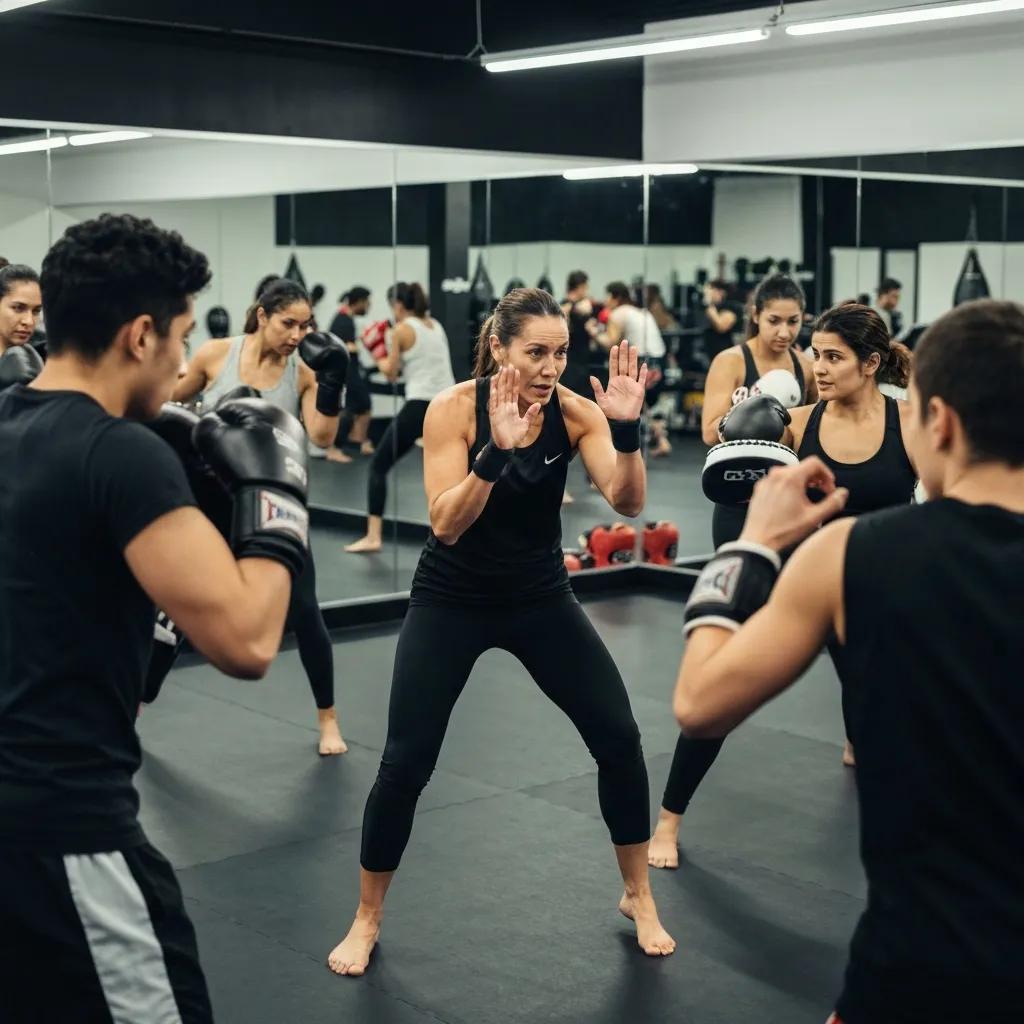
Kickboxing enhances self-defense by teaching efficient striking, timing, and distance control that let a defender create space and interrupt aggression. Practical drills emphasize palm strikes, elbow angles, and low kicks that reduce legal risk while maximizing stopping potential; these techniques hinge on proper footwork and angle creation rather than raw power. Training progressions include focus-mitt combinations, controlled partner drills for range recognition, and movement ladders to integrate evasive steps with counters, all of which improve reaction time in stress conditions. Safety and control are paramount: practicing with progressive contact levels and awareness of partner vulnerability reduces injury while building reliable striking responses. Mastery of these basics naturally leads into clinch work and transitions to grappling when an encounter moves to close quarters.
These striking fundamentals set up the next critical domain—how to manage the ground when a confrontation goes there.
What Jiu-Jitsu Techniques Build Personal Protection Skills?

Jiu-jitsu builds personal protection through positional control, escape mechanics, and submission avoidance focused on safety over sport scoring. Core positions like guard, mount, and side control are taught with practical escapes that prioritize getting to a safer posture or a route to disengage, rather than pursuing competitive submissions. Drills include posture-broken guard escapes, shrimping sequences to create space, and positional sparring with constraints that simulate clothing grabs or uneven surfaces, training students to retain situational awareness while defending on the ground.
Integrating jiu-jitsu with stand-up striking skills helps practitioners choose when to disengage versus control an aggressor, ensuring a flexible response toolbox that supports legal and safety-first decisions. Understanding ground dynamics completes the foundational skillset and connects to broader avoidance and decision-making strategies discussed next.
Boost Your Safety and Confidence with Toe2Toe Self-Defense
Practical self-defense techniques improve confidence and safety by combining physical skills with awareness and mental rehearsal that reduce hesitation and improve decision-making under stress. Training develops muscle memory for escapes and strikes, increases the perceptual field for threat detection, and conditions responses so practitioners act decisively when confronted. These gains lower the likelihood of victimization because confident posture, awareness, and prepared actions deter opportunistic threats and shorten reaction time. Below is a concise list of the key non-technical outcomes students typically gain from consistent training, each of which translates into fewer risky encounters and better outcomes when threats arise.
Core non-technical benefits support technical skills and reduce overall personal risk.
- Increased confidence and assertive body language that deter predatory behavior.
- Faster decision-making and reduced freeze response through stress-inoculation drills.
- Enhanced situational awareness that identifies escape routes and potential threats early.
- Improved verbal boundary-setting and de-escalation strategies to avoid physical confrontation.
These psychological and perceptual improvements directly support physical techniques by creating opportunities to avoid or end confrontations sooner, which leads into the practical mechanics of awareness and de-escalation examined next.
Why Is Situational Awareness Essential in Self-Defense?
Situational awareness is the habit of observing environment, people, and escape routes to anticipate and avoid threats before they escalate into physical conflict. It works by shifting focus from reactive to proactive—scanning exits, noting group dynamics, and recognizing precursors like aggression indicators—so you can plan a safe response or avoid the situation entirely. Simple daily drills, such as routine 360-degree checks, mapping nearest exits, and practicing verbal boundary statements, build this habit until it becomes automatic under stress. Training modules that pair awareness drills with movement and decision-making scenarios reinforce the link between perception and action, making avoidance the first line of defense and reducing reliance on physical techniques. Practicing awareness regularly therefore lowers exposure to risk and improves the effectiveness of subsequent de-escalation or defensive moves.
Developing awareness naturally raises the question of how to handle encounters verbally and mentally once they begin. Frequently asked questions
How Do De-escalation and Mental Discipline Support Physical Defense?
De-escalation and mental discipline support physical defense by giving you tools to defuse tension, set limits, and control your physiological response when confronted. Verbal techniques—calm directives, clear boundary-setting phrases, and distraction tactics—often end incidents without physical force, while stress-inoculation training conditions breathing and focus strategies to reduce adrenaline impairment. Mental rehearsal and scenario-based sparring teach decision-making that balances legal, ethical, and safety considerations, helping you choose disengagement or controlled physical response appropriately. Combined, these skills reduce unnecessary escalation, protect bystanders, and preserve options for escape, complementing the technical drills from kickboxing and jiu-jitsu. Mastery of mental and verbal tools closes the loop between perception, choice, and physical action, making training more than a set of techniques—it becomes a practiced survival strategy.
What Specialized Programs Does Toe2Toe Offer for Different Audiences?
Toe2Toe structures specialized programs to match audience needs: ladies-only self-defense for empowerment and realistic scenarios, anti-bullying classes for youth that emphasize respect and boundary-setting, fitness-focused classes for general conditioning, and corporate workshops for workplace safety and leadership. Each program packages core techniques with age- and role-appropriate drills and outcomes so participants build usable skills quickly while training in a supportive environment. The table below helps prospective students choose by listing programs, their target audiences, and the top three outcomes learners can expect from participation. After the table, a concise enrollment note describes how Toe2Toe supports sign-ups and class placement for local participants.
These program options let trainees select a focused path that matches their personal goals and lifestyle.
Toe2Toe provides instructor-led scheduling and program placement to help participants choose the best fit; local enrollment support makes trial classes and program progression straightforward for newcomers. For readers exploring options, the Ladies-Only and Anti-Bullying tracks blend skill practice with community support and are structured around measurable empowerment outcomes that parents and participants can track over time.
How Does the Ladies-Only Self-Defense Program Empower Women?
The Ladies-Only Self-Defense program emphasizes practical awareness, escape mechanics, and low-risk strikes tailored to common scenarios women face, along with confidence-building group exercises. Curriculum modules typically include boundary setting, wrist-release drills, movement to create space, and scenario role-plays that integrate verbal de-escalation with physical technique. Training occurs in a supportive, instructor-led setting designed to reduce intimidation and encourage skill progression at individual pace, with coaches focusing on safety and respect. Outcomes include improved assertiveness, faster threat recognition, and a toolkit of simple physical responses that favor escape and safety over confrontation. Graduates report greater day-to-day confidence and clearer decision-making when assessing risky situations.
This women-focused program naturally connects to broader youth and community initiatives like anti-bullying classes, which adapt core elements for younger learners.
What Are the Benefits of Anti-Bullying Classes for Youth Empowerment?
Anti-bullying classes for youth combine respect-based education, boundary-setting language, and age-appropriate physical skills that empower children to navigate peer conflict safely. Lessons cover assertive communication, recognizing unhealthy group dynamics, and simple physical responses that prioritize escape and reporting rather than escalation. The class structure uses short, repeatable drills, role-play scenarios, and parental progress updates to reinforce learning and track behavioral improvements over time. Beyond immediate safety skills, these programs foster resilience, respect, and improved self-esteem—outcomes that reduce bullying incidents and strengthen school and community environments. A focus on measurable behavioral goals helps parents and instructors monitor gains and adjust training to each child’s needs.
How Does Firearms Training Complement Martial Arts for Personal Protection?
Firearms training complements martial arts by teaching safety, marksmanship fundamentals, and legal-responsibility frameworks that apply when a firearm is an option for personal protection. It is an optional, safety-first module that emphasizes secure handling, situational decision-making, and when an armed response is appropriate within legal and ethical boundaries. The table below maps firearms modules to skill focus and offers integration tips for practitioners who also train unarmed techniques, clarifying how both tracks can reinforce safer decision-making rather than encourage unnecessary escalation. After the table, a factual note explains that Toe2Toe provides firearms training and licensing support in addition to its martial arts curriculum, ensuring interested students can pursue both tracks responsibly.
Treat firearms training as a complementary discipline that strengthens overall personal-protection judgment and safety.
Toe2Toe provides firearms training and licensing services as an optional extension of its curriculum, delivered with an emphasis on safety, legal awareness, and integration into a broader self-defense strategy. Students are encouraged to prioritize avoidance, de-escalation, and unarmed options and to view firearms training as an additional, regulated choice for personal protection.
What Firearms Training and Licensing Does Toe2Toe Provide?
Toe2Toe’s firearms offerings focus on safety modules, foundational marksmanship, and assistance with licensing processes for qualified candidates, all taught with a safety-first philosophy. Training emphasizes proper storage, mechanical safety, and decision-making protocols that clarify when an armed response is legally and ethically justified. Marksmanship sessions teach fundamentals like grip, sight alignment, and trigger control in controlled environments, and licensing support walks participants through common administrative steps and expectations. Integration with martial arts classes is explicit: firearms modules are positioned as optional and complementary, reinforcing the priority of avoidance and de-escalation. This structure helps students balance armed and unarmed preparedness with clear legal and safety boundaries.
These firearms modules are designed to enhance responsible choices, not replace foundational unarmed skills or situational awareness training.
How Does Firearms Training Enhance Overall Self-Defense Strategy?
When taught responsibly, firearms training enhances a self-defense strategy by clarifying legal responsibilities, increasing the practitioner’s ability to make safer choices under threat, and reinforcing a decision-making hierarchy that favors escape and avoidance. The relationship between unarmed and armed skills can be framed as a layered response: situational awareness and de-escalation first, unarmed techniques second, and firearm use as a regulated, last-resort option consistent with local laws. Training across disciplines promotes a knowledge graph of decisions—recognize, avoid, disengage, and only then consider escalation if legally necessary and safe—which reduces impulsive or inappropriate use of force. Emphasizing joint training scenarios where students rehearse transitions (securing a scene, moving to cover) helps integrate motor skills and judgment, ensuring that any armed option is exercised with restraint and responsibility.
This integrated approach reduces risk, promotes lawful behavior, and supports safer outcomes for both defenders and bystanders.
Why Should Business Owners Choose Toe2Toe Corporate Self-Defense Workshops?
Corporate self-defense workshops at Toe2Toe target risk reduction, team cohesion, and leadership under pressure by combining situational awareness, low-escalation techniques, and practical risk-assessment drills. Workshops are customizable for on-site or off-site delivery and focus on efficient, low-risk skills that employees can apply in public-facing roles or during travel. Outcomes typically include improved team communication during incidents, clearer evacuation and response plans, and leadership practice in making rapid, safety-first decisions under stress. The list below summarizes typical workshop benefits for business owners considering training as part of corporate wellness or risk management programs.
- Enhanced team situational awareness and incident prevention.
- Practical non-escalatory techniques appropriate for customer-facing roles.
- Improved leadership response and communication during emergencies.
After implementing workshops, employers often see stronger team cohesion and clearer protocols for incident response, which supports both safety and productivity. For businesses exploring options, Toe2Toe offers tailored modules that align with corporate wellness goals and operational needs while prioritizing non-violent, legally sound responses.
What Self-Defense Techniques Are Most Effective for Business Professionals?
Business professionals benefit most from concise, low-risk techniques that prioritize avoidance, quick escapes, and boundary-setting rather than prolonged physical engagement. Recommended practices include assertive verbal scripts, simple wrist-release techniques, and light striking or pushing tactics designed to create an opportunity to flee. Training drills tailored for the workplace incorporate situational rehearsals—managing aggressive customers, escorting colleagues to safety, and using office layouts to increase distance—that respect dress code and professional constraints. Emphasis on mental rehearsal, role-specific scenarios, and short, repeatable drills ensures busy professionals can retain and apply skills efficiently. These pragmatic techniques minimize liability while maximizing personal and team safety.
Effective workplace training bridges the gap between personal readiness and organizational risk management.
How Does Self-Defense Training Improve Workplace Safety and Leadership?
Self-defense training improves workplace safety and leadership by building a culture of awareness, clear emergency communication, and practiced response sequences that reduce confusion during incidents. Teams trained in situational assessment and role-specific actions perform coordinated evacuations, de-escalation, and first-response stabilization more effectively than untrained groups. Leadership benefits from stress-exposure exercises that model calm decision-making, which cascades through teams and improves overall morale and trust. Measurable outcomes include faster incident resolution, fewer safety-related disruptions, and stronger employee confidence in organizational safety procedures. Investing in structured, repeatable workshops therefore yields both human and operational returns by aligning personal readiness with corporate protocols.
How Can You Get Started with Toe2Toe Self-Defense Training in Conway, AR?
Getting started with Toe2Toe training is a simple four-step path that moves new students from inquiry to trial and then into a tailored program track based on goals, schedule, and skill level. First, identify your primary goal—self-defense, fitness, or professional training—so instructors can recommend the appropriate program. Second, schedule a trial class to experience the training environment and meet instructors; trials allow assessment of fitness, comfort level, and preferred learning pace. Third, register for a beginner track that sequences core methods before optional modules like firearms or corporate workshops; this progression builds competence systematically. Finally, follow basic preparation guidance—comfortable athletic clothing, hydration, and an open mindset—so you get maximum value from your first sessions.
These onboarding steps clarify expectations and make the transition into regular training straightforward for new participants.
What Are the Steps to Join Adult Martial Arts and Self-Defense Classes?
Joining adult classes involves a short intake process, attending an introductory trial, choosing a beginner program or membership, and preparing with minimal equipment recommendations. The intake typically captures your goals and any physical limitations so instructors can tailor progressions safely; this is followed by a trial session that demonstrates class structure and coaching style. After trial, registration options include beginner-focused tracks that emphasize core methods—kickboxing and jiu-jitsu—before optional modules such as firearms or corporate workshops. New students should wear breathable athletic clothing, bring a water bottle, and arrive ready to move; coaches will advise on protective gear as skill training advances. This straightforward sequence reduces barriers to entry and ensures a supportive learning curve.
Structured onboarding supports long-term participation and measurable skill gains.
Where Is Toe2Toe Located and How Can You Schedule a Trial Class?
Toe2Toe Martial Arts & Self Defense Training is located at 807 Bill Dean Drive, Conway, AR 72032, and maintains a Google Business Profile for local directions and reviews. Prospective students can schedule a trial class by calling the studio phone number and discussing available class times and program fits with staff. Trial classes are designed to introduce new members to class pacing, safety protocols, and instructor expectations while allowing coaches to recommend an appropriate beginner pathway. Expect a welcoming, instructor-led environment that focuses on skill fundamentals, awareness training, and gradual progression tailored to your objectives and schedule.
For immediate action: call 501-361-1401 to inquire about trial availability, corporate workshop bookings, or firearms licensing support; staff can guide you to the best program and class times for your needs.